

What Makes an International School Truly Future-Ready?
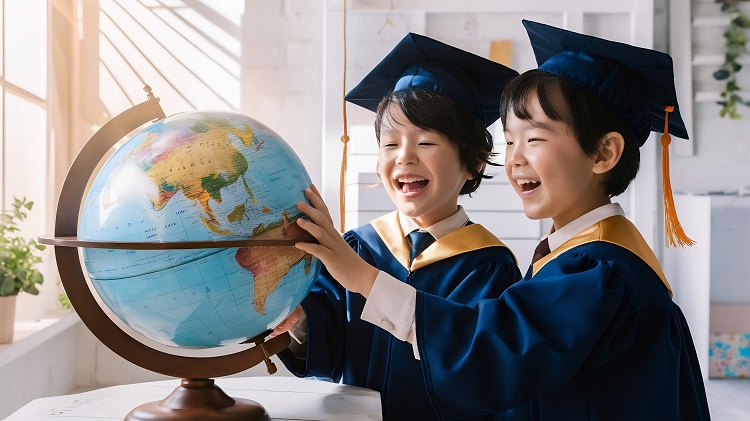
"Future-ready" shows up in almost every school prospectus these days, usually next to a photo of kids coding or building something with robotics kits. It sounds good. But ask five school leaders what it actually means, and you'll get five different answers. So it's worth asking properly: what does it really take for an international school to prepare a child for a world none of us can fully predict?
It's not really about the technology
A school full of gadgets isn't automatically more future-ready than one without. Tech moves fast, and whatever tool a child learns today may be irrelevant by graduation. What matters more is whether a school teaches kids to pick up new tools quickly, question what they read, and adapt when things change. The best schools treat technology as a means to build thinking skills, not the end goal itself.
Thinking without a fixed answer key
Traditional schooling often trains students to find the one correct answer. That's useful, but incomplete. Real-world problems are usually messy and involve people who disagree. This is why project-based learning and real debate matter they teach students to hold two conflicting ideas at once and still make a decision.
Working with people unlike yourself
A genuinely diverse international school has a natural advantage here. A classroom with students from a dozen countries and several home languages is daily practice in exactly the kind of collaboration that global workplaces now demand as long as the school leans into it, rather than leaving it to chance.
Emotional steadiness matters as much as academics
It's easy to overlook resilience while talking about AI and robotics labs. But the years ahead will be disorienting new tools, new careers, more information than anyone can process. A child who's never sat with failure or managed real stress will struggle, no matter how many coding classes they took. The strongest schools build this in deliberately, through real responsibility and honest pastoral care.
Teachers who keep learning too
A future-ready international school needs future-ready teachers ongoing professional development, not a single yearly workshop, and a willingness to keep revising how things are taught.
The bottom line
None of this requires flashy equipment. Some of the best classrooms are quiet, low-tech spaces where kids wrestle with real problems and are trusted with real responsibility. Future-ready has less to do with gadgets on a shelf and more to do with habits of mind curiosity, comfort with uncertainty, and the confidence to work alongside people who think differently. That's harder to photograph than a robotics lab, but it's what actually matters when choosing an international school.